
From Mary Oliver’s poem “Sometimes.”
original image: Cannadian Horseshoe Falls by Robin Lee
At the annual NESCBWI conference, surrounded by writers and illustrators and editors and agents, it’s easy to think about community. Writing can feel like a solitary job, and it’s good to spend a weekend with people who really get it. And being around people who get it was just what I needed.
Due to scheduling and budgeting, I didn’t get to go to any writing retreats in the last year, and I didn’t realize how much I needed that time with my writing community until I got to Springfield. There’s something about being surrounded by people who share your passion and by setting aside time to remember that, no matter what the struggles, you are a writer.
A few favorite moments from the conference:
 Getting to spend time with my critique group, including two members who no longer live in the New England area and make the trip out for the weekend.
 ‘improv’ writing workshop.
I headed into May feeling inspired and rejuvenated and ready to write. No matter what you’re working on now, I hope you can find a chance to connect with your fellow writers and remember what we’re all in this together.
Because I’m a writer and because apparently writers are incapable of going for a long run without thinking about how it applies to their writing lives, here are 26 things about running that resonated with my writing life.

Runs by Steel Wool
Your pace is the only one that matters
The first few miles, I was passed by a LOT of people, even though I was going slightly faster than my planned race pace. But I had to remind myself that trying to ‘keep up’ with everyone would majorly hurt me in the long run. Even if everyone else seems to be going faster, it doesn’t matter. Your journey and your work is the only thing that matters to you.
Hydration by Robot Brainz
Fuel accordingly
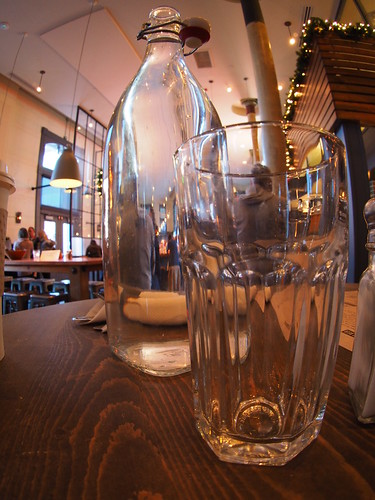
Hydration is keep when you’re running. Coffee is key when you’re writing. Also chocolate. (Okay, water is key when you’re writing, too.)

Time by Moyan Brenn
Make the time
You need to set aside time to run and time to write. Otherwise it’s really easy to say “eh, I’ll do it later” and not give yourself any time.
New running shoes by quimby
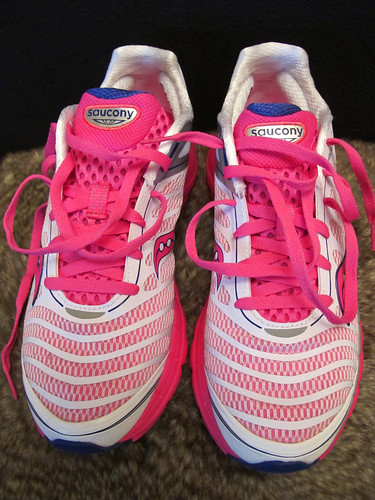
But colorful accessories can make you feel better
Hot pink post-its and bright blue running socks can give you that little extra boost that plain white just can’t match.

The 2016 DFMC team photo
Your community matters
Running and writing feel like solitary activities, but having a supportive community matters. I never could have gotten to the finish line without the support of so many people. From my family and friends to the Dana-Farber team and staff and volunteers to people cheering for us on the course, it didn’t feel like I was alone in this journey. And I’m just as glad to be part of a supportive writing community that inspires me and encourages me every step of the way.
Lessons you’ve learned from writing and running? Share them in the comments!
 If you ask me what my favorite day of the year is, it’s gotta be Marathon Monday. This year, after lots of training and fundraising and obsessively checking the weather forecast, I got to anticipate in Marathon Monday in the best way possible–by running the Boston Marathon with the Dana-Farber Marathon Challenge team.
I’m still kind of baffled that it all actually happened, and more about how my experience as a runner relates to my life as a runner to come, but for now here’s a look at what the whole weekend was like for a newbie marathoner like me.
Marathon Weekend
I’m used to seeing runners come into town for the marathon, but this was the first time I got to go to the B.A.A. Expo and pick up a number of my very own. (Sightings of Meb Keflezighi and Kathrine Switzer were pretty cool, too.) On my way over to check in with the DFMC team, I stopped by the Barnes & Noble (because how do you pass a bookstore without going inside) and saw the shiny new paperback of Breakfast Served Anytime by Sarah Combs, one of my favorite YA authors and a fellow runner. I took this as a good sign for Monday.
On Saturday, I took it easy, painted my nails, tried not to check the weather forecast every 10 minutes.
 On Sunday, the DFMC staff organized a pasta dinner for the team and loved ones. Our team raises money for cancer research, and even before I joined the team I knew that was a worth cause. Over the training season, I’d heard so many stories from teammates and volunteers who had lost loved ones–parents, grandparents, friends, siblings, children–far too early. At the pasta party, we heard stories from cancer survivors, from people who had lost loved ones. We heard about how the money we’re raising goes directly to research that will save lives and improve quality of life for patients. It was a great reminder that, no matter how the race went, we had already helped make a difference for someone’s loved ones.
Marathon Monday
 5:30am: wake up time. I slept better than I expected to the night before, including a dream about being part of a caper with Dwayne “The Rock” Johnson, which I took as another good sign.
Walt, supportive guy that he is, woke up with me and drove me out to Hopkinton so I could catch the runner shuttle to the Athletes’ Village. DFMC rents out a church for team members, so I got to wait there until start time, drinking water and stretching and getting advice from veteran marathoners. The two biggest pieces of advice–go slower than you think you need to when you start, and enjoy the day.
10:45am: time to line up. Most of the DFMC team was in Wave 4, Corral 3, so we shuffled out to the start line, along with a ton of other charity runners. It was already hot out, and I was kind of worried about how I’d do in this weather. (I’m basically a vampire, so sun/heat does not work for me.) But even with that and worrying about all 26.2 miles ahead, I was so excited to be there and ready to run.
 11:15am: start gun blasts, and we were off!
11:52am: first 5k. I tried to keep the advice of my teammates in mind and keep to my pace, but it was so hard when everyone was passing me and it felt like I was going way slower than I was. Ended up doing about an 11:30 pace, about 30 seconds faster than I planned.
Fortunately, at the 3 mile water station, I got to see my friend and crit partner and Marathon Monday volunteer, Katie Slivensky. Getting a hug and cheering from a good friend made a huge difference at the beginning of the race.
1:20pm: 15k down (about 10 miles) and into Natick, I was looking for my mom  and a good family friend, who told me they’d be in front of a big church. I passed one and thought I missed them, but found them a couple of blocks later in front of another big church. I got more hugs, plus some water and gatorade and fuel and sunscreen.
2:00pm: half of the marathon down, and still a long way to go. Things started to cool down, and a headwind picked up, so heat was less of an issue, but I made sure to keep taking Gatorade and water at stops. Going by the Wellesley ‘scream tunnel’ was a big boost to get me into Wellesley Square and onto familiar turf.
3:52pm: 35k (almost 22 miles) done. Around mile 19, Walt and friends Emily and Billy, plus their adorable baby, were cheering for me and waving the best sign ever. They were standing where we’d all been a couple years ago, and it was so cool to be on the runner side of things this year. I got more fuel, hugs, and baby high-fives, and took off for the hardest part of the course–Heartbreak Hill.
Our team did long runs over Heartbreak a few times, so the sight wasn’t new, but running it after 20 miles was. But I’d been refueled and had been pacing myself well and, even though I saw a lot of people walking it, I wanted to run the whole way. I wasn’t much faster than the walkers, but I powered up and over and felt like a total badass.
 4:30pm: 25 miles in, and I’d passed through my old neighborhood of Brookline (even catching sight of friend and fellow writer Jill of Looks and Books!). The Citco sign was in sight and, even better, DFMC had a cheering section at mile 25. I ran over to get a hug from Sandy, one of our team’s most inspiring and committed volunteers, and felt so pumped to finish strong.
My legs were sore. My arms were chaffing. My feet were tired. But once I saw that sign that told me I only had one more mile, I got a burst of energy. I was doing this–I was going to finish.
I turned left on Hereford, right on Boylston, like I’d always imagined. And guys–nothing beats that turn onto Boylston.
 Even though I was running at the end of the day, there were still so many people cheering. It was a beautiful day and I was in a city I loved on my favorite day of the year. My feet were light and my heart was full and I was going to cross that finish line.
4:44pm: I crossed that finish line.
I finished in 5 hours, 27 minutes, and 47 seconds. Since I was planning for a finish time between 5 and 6 hours, this was exactly what I was shooting for.
I always thought I’d cry after crossing the Boston Marathon finish line–and I only didn’t because I knew that if I started, I’d have trouble breathing and this was not a moment to lose my breath. Instead, I opted for awe and happiness.
I got my official Boston Marathon medal. (All medals should have unicorns on them.) I got a hug from Jan, DFMC organizer extraordinaire and the woman who keeps us all safe and running and inspired. DFMC volunteers guided me to the team recovery area, where I got changed, got food, and got a massage.
 Walt picked me up, and we went home, where I showered and turned my phone on to see all the supportive texts and tweets and emails and comments from family and friends.
Running seems like something you do alone, but so much of it is about your community–your fellow runners, your supporters, strangers who cheer you on from the side of the road. So here are a few Marathon Monday thank yous of my own:

I’m sore and tired but so happy. Stay tuned tomorrow for more thoughts on running and writing, but for now, this runner is taking recovery seriously and basking in the glow of 26.2 miles of awesomeness.
 “You ask whether I should continue to write if no one but myself would ever see my work. There is no reason to believe that anyone will ever see any more of my work…We are likely to give many incorrect explanations for what we do instinctively. It is very easy for me to say that I write poetry in order to formulate my ideas and to relate myself to the world. That is why I think I write it, though it may not be the right reason. That being so, I think that I should continue to write poetry whether or not anybody ever saw it, and certainly I write lots of it that nobody ever sees. We are all busy thinking things that nobody ever knows about.”-–Wallace Stevens in a letter to editor Ronald Lane Latimer, from Letters of Wallace Stevens
We write because it’s what we do. We don’t write because it’s going to be published or win awards or get a million reviews. We write because we’re writers.
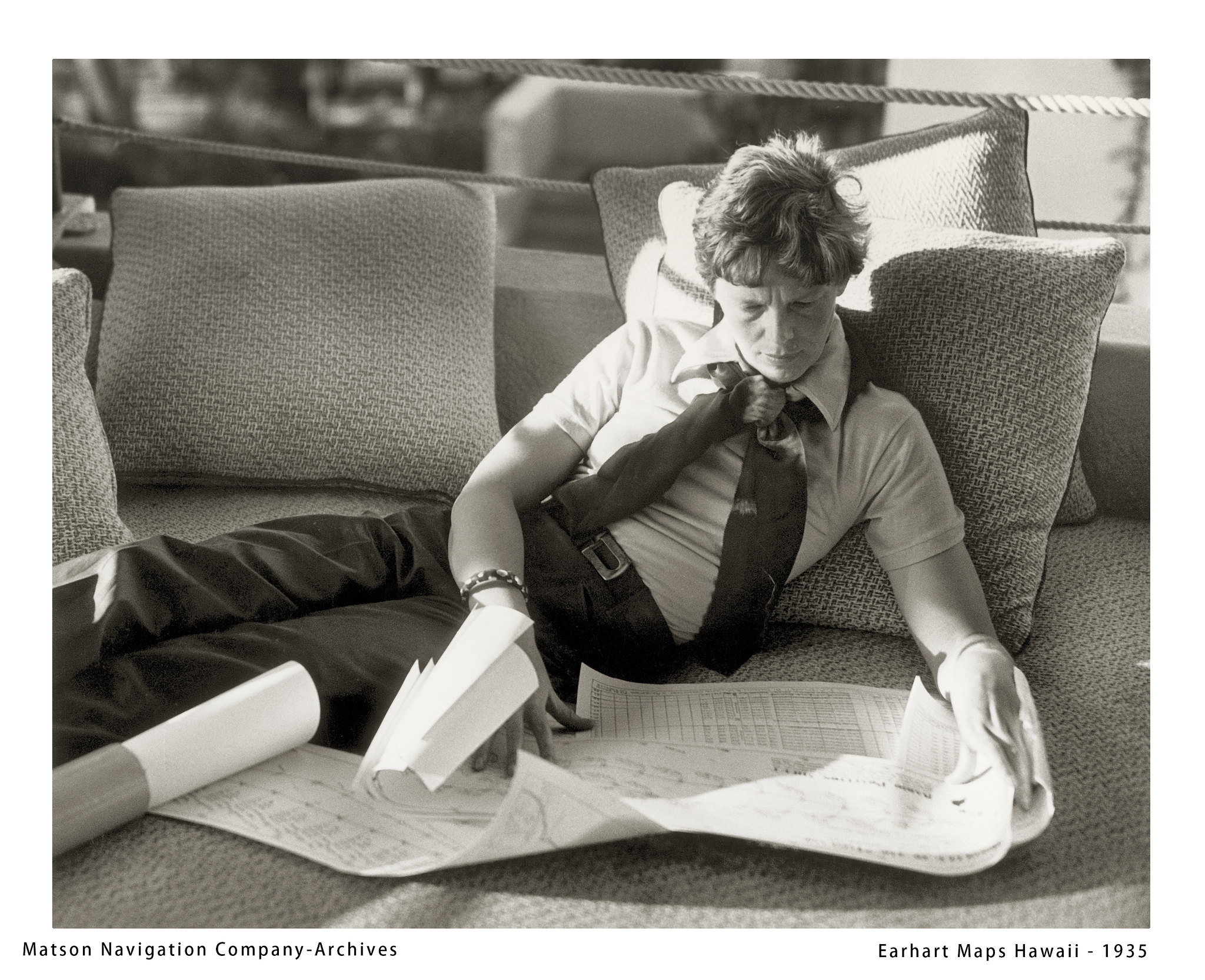
Today’s the last day to enter my International Women’s Day giveaway! Share your favorite awesome woman from history, and enter to win a signed copy of The Chance You Won’t Return.
Having a hard time narrowing it down? A few of my favorites (along with Amelia Earhart, of course), are Supreme Court Justice Ruth Bader Ginsburg, Frida Kahlo, Coretta Scott King, Sally Ride, Julia Child, Harriet Tubman, Kathrine Switzer, Jane Austen, Eartha Kitt, and pretty much anyone Mackenzi Lee has mentioned in her #BadassLadiesofHistoryYouShouldKnow series. So if you’re like me and like talking about awesome women in history, get yourself over to the giveaway and enter to win!
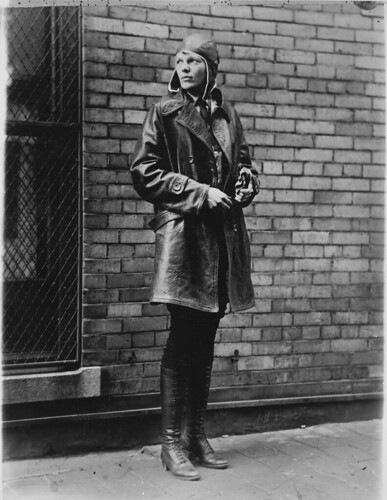
Today is International Women’s Day and considering female pioneer of aviation Amelia Earhart plays into my novel in a big way, it seems like a fantastic day for a giveaway. First, a few cool facts about the famous aviatrix:
Want more historical trivia about Amelia Earhart (plus some family drama, driver’s ed, mental health, and kissing)? Enter this giveaway to win a signed copy of The Chance You Won’t Return! Entries are open until March 15.
Want bonus points? Share your favorite female historical figure (or figures, there are a lot of great ladies to choose from) in the comments!
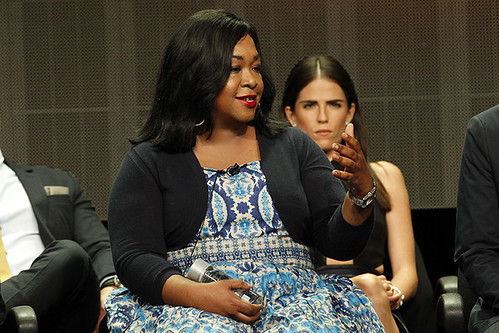
(ABC/Image Group LA) SHONDA RHIMES
“I don’t even know who a character is until I’ve seen how they handle adversity.”
—Shonda Rhimes
I’m reading Rising Strong by Brené Brown right now, and she includes this quote from an interview she had with writer/producer Shonda Rhimes. Brown uses this quote to talk about how we all deal with adversity and how it can demonstrate who we are, but I think this is also a great quote for writers to keep in mind. We don’t know a character until we see them face a major challenge–and this is when the story has to start. It’s gotta be on the day when everything changes for them, when they face the biggest challenge of their lives. Otherwise, how do we really know them?
When do you feel like you really know your characters? Share in the comments!
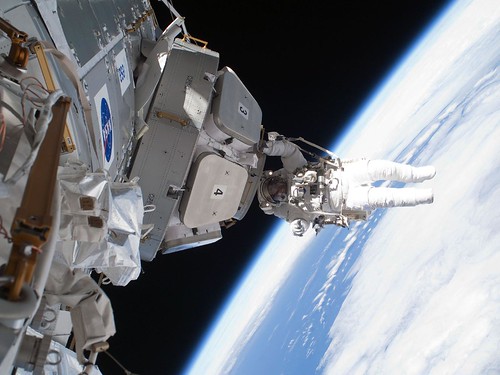
Window to the World (NASA, International Space Station Science, 02/10)
NASA is currently accepting applications for a new class of astronauts at the Johnson Space Center in Houston, TX. Giving a glimpse into the NASA life, current astronaut Stan Love shares some advice for applicants.
Most surprising for me? How much of Love’s advice could be applied to writers.
I know. Usually when we talk about STEM (science/technology/engineering/math) careers, they’re at the opposite end of careers in the arts. STEM careers are stable, money-makers. Arts careers are an unstable crapshoot.
But Love’s description of life as an astronaut suggests that the two career paths are way more common than you’d suspect. He talks about the ups and downs of having one of the coolest jobs ever:
“It’s hands down the coolest job on or off the planet…The cherry on top is actually strapping into a rocket and blasting off to orbit around Earth (or, starting in a few years with Exploration Mission-2, the moon). You’ll float peacefully in weightlessness and gaze out the window as our amazing planet rolls by underneath you at 25 times the speed of sound.
Unfortunately, most of an astronaut’s time isn’t spent in space. It’s spent working at NASA’s Johnson Space Center in Houston, Texas…At my house, an astronaut takes the trash out to the curb every Tuesday morning.”
I don’t know much about being an astronaut, but that totally reminds me of being a writer. Writing is awesome–nothing beats being totally immersed in a story, understanding the characters and their motivation and riding along with the plot.

Center of the Milky Way Galaxy (NASA, Chandra, 11/10/09)
But that’s not most of writing. Sometimes it’s you, staring at your computer, writing a sentence and deleting it, or deciding that the last chapter isn’t going to work. It’s finishing a draft and going back to revise it for the fifth time. It’s querying and going on sub and getting rejected and getting bad reviews. It’s balancing your writing with your family and friends and other jobs and that laundry that somehow hasn’t learned to do itself.
Come on, you think. Anyone with a STEM background automatically gets a great job! What does someone at NASA know about rejection? Um, a lot, it turns out:
“In our last selection in 2013, we had more than 6,000 serious applicants. We hired eight of them. That’s just slightly better than one-in-a-thousand odds…I started sending in applications – and updating them regularly – in 1991. I did that seven times in all. I got an interview (an exciting milestone, since it means you’ve made the short list) in 1994. I interviewed three times before finally getting hired in 1998. I like to joke that I didn’t so much impress the Astronaut Selection Board as wear them down.”
Kind of like the querying/submission process, right? One rejection doesn’t mean you’re not a worthwhile candidate or that your career is over. It means maybe not right now. It means keep trying.
Love also talks about managing expectations with regard to the application process, rejection, and not framing your life around trying to game the system:
I met some folks who had dedicated their whole lives to becoming astronauts. They learned to fly, not because they love airplanes, but because they heard that the Astronaut Selection Board likes pilots. They learned to scuba dive, not because they love the sea, but because they heard that the board likes scuba divers. I observed folks doing these things, and then not getting selected (the likeliest outcome), and then becoming very, very bitter and disappointed people.
I didn’t want to follow their example, and I recommend that you don’t either. Instead, just do what you love doing.
I was drawing pictures of airplanes and spaceships in first grade, so when I had the chance to earn a pilot’s license, or take elective courses in aerospace engineering…or take a job as an engineer working on spacecraft optical instruments at NASA’s Jet Propulsion Laboratory, I jumped on it. And I had a blast.
Now, all of those things were also good for applying to be an astronaut, so I went ahead and included them on my applications. But because I was doing what I loved, I would have been perfectly happy where I was—even if I hadn’t been picked as an astronaut.
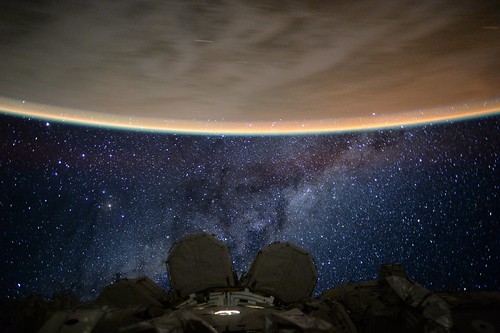
Space weather forecast from @ISS: Moonless with a chance of #Perseid meteors! – photo by Astronaut Scott Kelly
There’s no way to know what a publisher will like, what kind of book is going to be the next major bestseller, or what kind of book will be in print for the next fifty years. You can try to write a book that you think has all the elements of being a bestseller (vampire dystopian quirky romance!), but there’s no way it’s going to resonate with anyone if you don’t write it out of pure love. Sometimes the story you love is also the story that’ll sell a gajillion copies and get you a castle next to JK Rowling’s. If that’s the case, awesome. But you get there because you’re writing the story of your heart, not because you’re writing the story you think will sell.
For artists and for astronauts, you have to deal with a lot of rejection. Maybe someday you’ll see your book on a shelf or see the Earth from orbit. Maybe not. But the work you do should be what propels you forward–even when it’s not fun and when it really feels like work. Because when you put yourself and your passion in your work, that comes through to editors and to the Astronaut Selection Board.
I get super motion sick, so I won’t be applying to the astronaut class anytime soon. But I’m glad to take a little astronaut advice into my writing life as we all explore new worlds.
Photo by Sacha Fernandez
“You can measure your worth by your dedication to your path, not by your successes or failures.”—Elizabeth Gilbert
I recently read Gilbert’s Big Magic: Creative Living Beyond Fear, which was just the book I needed. And I’ve been talking with friends in the arts recently about our fears and frustrations, and how success always seems so much easier for other people to achieve.
Gilbert’s quote above is a nice reminder that you can’t measure success by how many awards you win or how much you make on an advance or how many reviews you get, because no matter how many awards or how much money you get, you’re still not going to feel like a success . The work itself has to be the thing that keeps you moving down the path.